
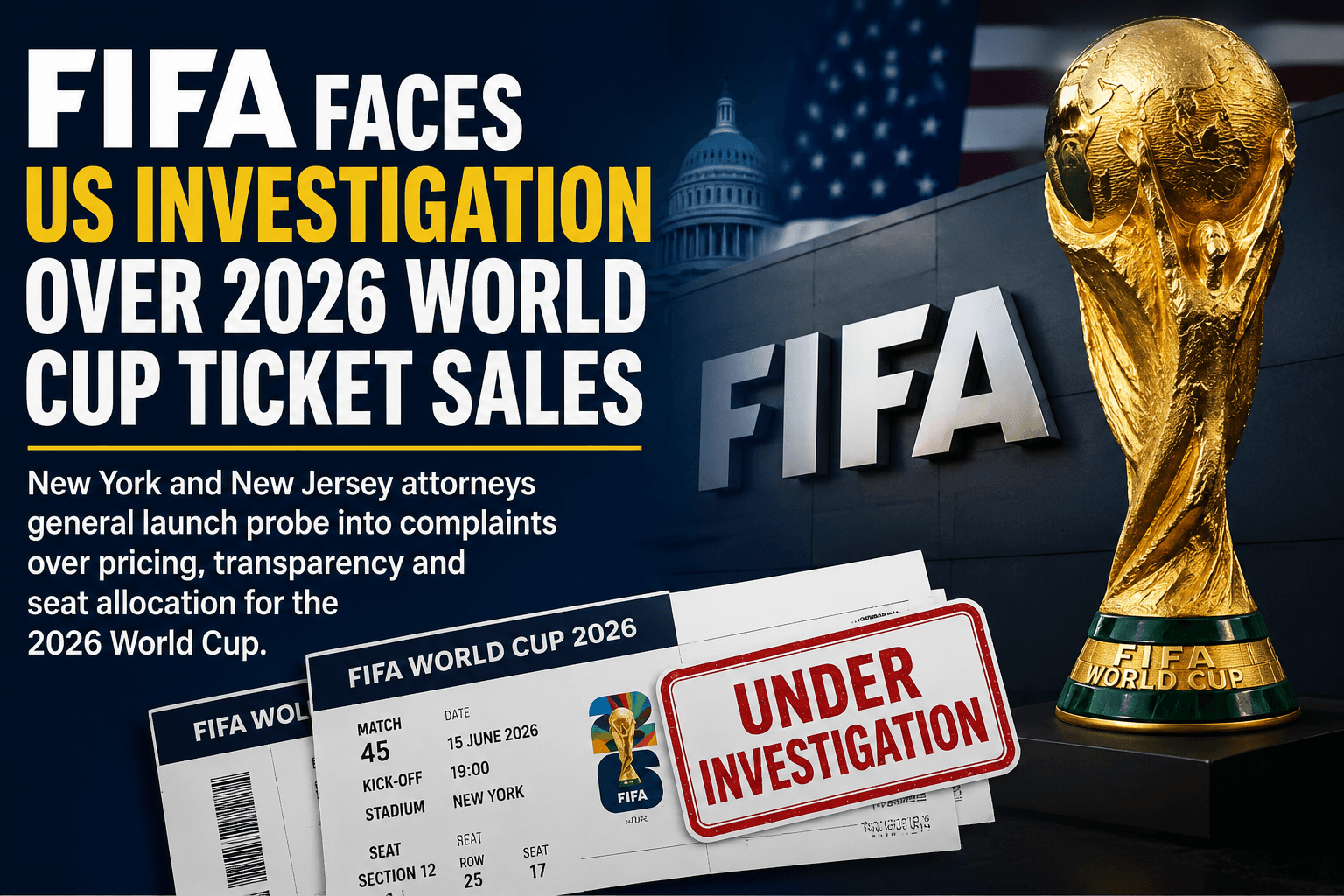
Khel Jagat/ FIFA is facing growing legal scrutiny in the United States over its ticketing practices for the 2026 FIFA World Cup after officials in New York and New Jersey launched an investigation into allegations of misleading pricing and consumer manipulation.
The attorneys general of both states have demanded answers from FIFA following complaints that football fans may have been misled during the sale of World Cup tickets, with accusations ranging from artificial scarcity and confusing sales systems to rapidly inflated prices and unclear seat information.
According to officials, FIFA has now been subpoenaed and ordered to provide detailed information regarding ticket sales, pricing strategies and seat allocation methods connected to matches hosted in New Jersey, including the World Cup final scheduled for July 19 at MetLife Stadium.
The investigation is being led by New Jersey Attorney General Jennifer Davenport and New York Attorney General Letitia James.
Authorities say consumers reported confusion during multiple ticket sale phases, with some supporters claiming they were not properly informed about the exact locations of seats they purchased. Others alleged that FIFA later introduced more expensive “front” category tickets after initial sales had already begun, creating frustration among early buyers.
Officials are also examining whether FIFA’s public communication and release schedules contributed to rising ticket prices by creating a sense of scarcity among fans eager to secure seats for the tournament.
Reports suggest that ticket prices for nearly 90 of the tournament’s 104 matches increased significantly across different sales phases, with some prices allegedly rising by an average of around 34 percent depending on demand.
Critics argue that the dynamic pricing model effectively turned the ticketing process into a high-pressure marketplace where ordinary supporters struggled to access affordable seats.
Jennifer Davenport strongly criticised FIFA’s handling of ticket sales, accusing the organisation of creating unnecessary confusion for consumers. “Being honest about ticket sales is not complicated,” Davenport said while announcing the investigation.
“But FIFA has turned buying a ticket to the World Cup into a gauntlet of confusion, fake scarcity and impossibly high prices,” she added. Davenport also stressed that while hosting the World Cup was a major honour for New Jersey, it should not come at the expense of consumers.
New York Attorney General Letitia James echoed those concerns, arguing that fans deserved transparency and fairness after waiting years for the World Cup to return to North America. “No one should be manipulated into paying sky-high prices for seats,” James said, adding that buyers should be able to trust that the tickets they purchase match what they are promised.
The investigation reflects broader concerns surrounding ticket sales for major sporting events and concerts, where dynamic pricing systems and limited availability often lead to soaring costs for consumers. Over recent years, ticketing controversies have become increasingly common across entertainment and sports industries, especially as online sales platforms use demand-based pricing models similar to airline or hotel bookings.
Supporters of dynamic pricing argue it reflects real market demand and helps prevent ticket resellers from making massive profits. Critics, however, say such systems often exploit emotional demand from fans and make major events inaccessible to ordinary people. The 2026 FIFA World Cup is expected to become one of the largest sporting events ever staged, with matches taking place across the United States, Canada and Mexico. The tournament will also feature an expanded format involving 48 national teams instead of the traditional 32.
Because of the tournament’s scale and popularity, ticket demand has already reached extraordinary levels months before the competition begins.
MetLife Stadium in New Jersey will host several major fixtures, including England’s group-stage match against Panama as well as the tournament final. Workers have already started preparing the stadium, including installing a new real-grass pitch specifically for FIFA requirements. The investigation could place additional pressure on FIFA at a time when the organisation is already facing scrutiny over tournament logistics, pricing policies and fan accessibility.
Consumer advocates argue that transparency is especially important for events like the World Cup because many supporters spend thousands of dollars on travel, accommodation and tickets years in advance. New Jersey authorities have now encouraged residents who believe they were affected by misleading ticket sales or who have not received purchased tickets to file formal complaints through the state’s consumer affairs system.
So far, FIFA has declined to publicly comment on the allegations or the ongoing investigation. Legal experts say the inquiry could potentially lead to stronger oversight of ticketing practices for future major sporting events in the United States, especially as concerns continue growing over hidden fees, resale pricing and dynamic ticket inflation.
For millions of football fans hoping to attend the 2026 World Cup, the investigation has raised fresh questions about whether the world’s biggest sporting tournament will remain financially accessible to ordinary supporters — or increasingly become an event reserved for wealthier buyers able to absorb rapidly rising costs.