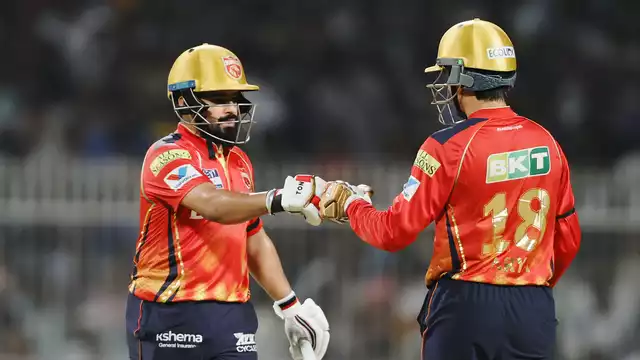
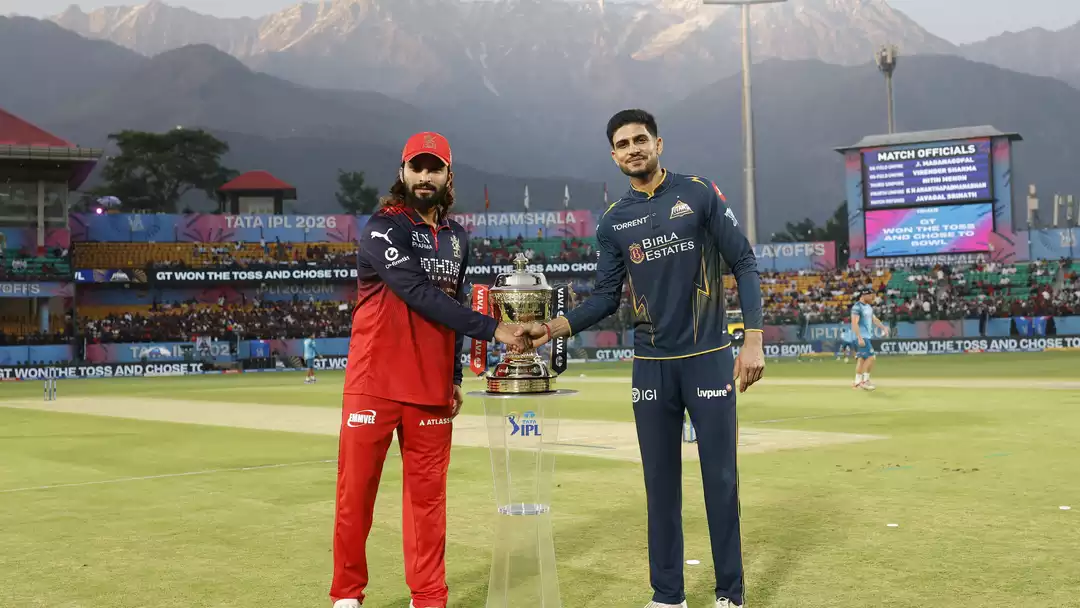
KHEL JAGAT / IPL2026 / The sweltering heat of Ahmedabad is a familiar backdrop for the climax of the Indian Premier League. As the colossal Narendra Modi Stadium prepares to host yet another blockbuster final, the spotlight falls squarely on the two men who will walk out for the coin toss: Rajat Patidar and Shubman Gill. They are two title-contending captains who have not just led their respective franchises to the summit clash, but have spent the entirety of this season challenging assumptions, dismantling preconceived notions, and proving that the modern T20 game is not a monolith.
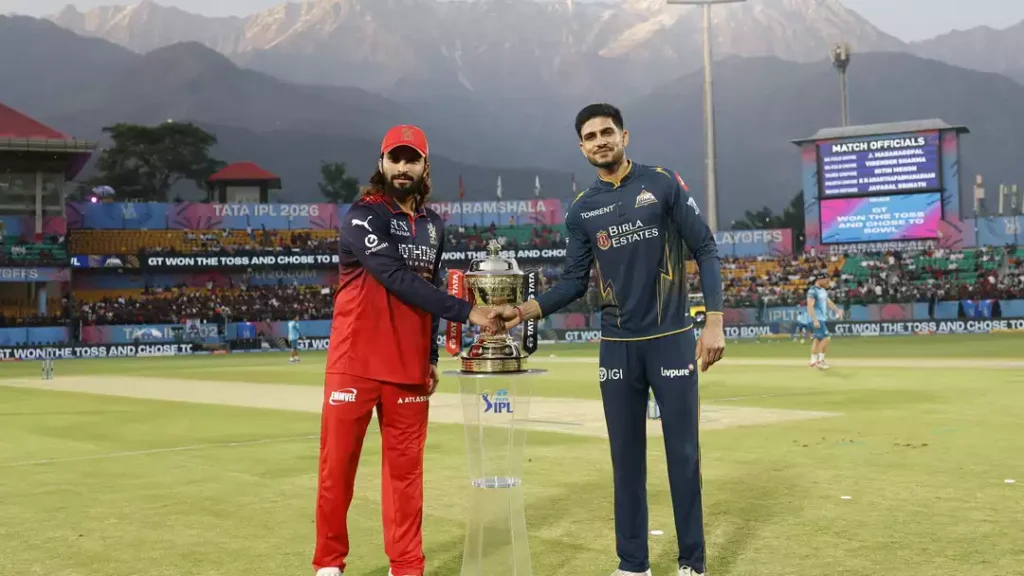
They arrive at this grand finale bearing the scars and triumphs of the playoffs, having navigated Qualifier 1 and Qualifier 2 with spectacular, era-defining innings. But more importantly, they arrive having defied the specific labels the cricketing world had so eagerly attached to them. One was supposed to be a one-dimensional spin hitter; the other, an aesthetically pleasing anachronism in a format obsessed with brute force. By the end of a dramatic week, both had shredded those narratives to pieces.
The Dharamsala Masterclass: Patidar Defies the Pace Barrage
To understand the magnitude of Rajat Patidar’s evolution, one must revisit the picturesque stadium in Dharamsala during Qualifier 1. The Gujarat Titans, a team renowned for their meticulous planning and data-driven matchups, walked onto the field convinced they had the blueprint to neutralize the opposition captain.
The theory regarding Patidar had been developed and refined over several months. The prevailing wisdom was simple: keep spin away from him, challenge him with express pace and steep bounce, and force him into uncomfortable, cramped positions on the crease. Patidar had built his reputation as a devastating destroyer of spin bowling, a batter who could hit through the line and dispatch tweakers into the stands with ease. The Titans’ brain trust believed that if they subjected him to a relentless diet of hard lengths and hostility, his limitations would be exposed.
Gujarat Titans arrived equipped with an intimidating pace battery perfectly suited for this exact assignment. The quartet of Kagiso Rabada, Mohammed Siraj, Prasidh Krishna, and Jason Holder presented a terrifying proposition. Rabada and Siraj wreaked havoc with the new ball, making it talk on a lively Dharamsala track, while Prasidh and Holder were tasked with extracting venomous nip and bounce from hard lengths as the ball grew older.
What transpired, however, was an innings of breathtaking violence and supreme skill. Patidar, armed with a newfound technical solidity and perhaps a slight rub of the green, did not just survive the pace barrage; he obliterated it. He played a knock for the ages, an unbeaten 93 off a mere 33 deliveries. It was a loud, chaotic, and utterly dominant innings laced with five boundaries and an astonishing nine sixes.
But it was not the volume of runs that made the innings memorable; it was the identity of the bowlers who suffered. Patidar systematically dismantled an attack built entirely around high-end pace. The defining moment of the tournament, and perhaps the shot of the season, came against Rabada—a thunderous back-foot punch that sailed majestically over the covers for a colossal six. It was a shot that screamed of immense core strength, perfect weight transfer, and absolute disdain for the bowler’s pedigree.
This innings was the culmination of an all-around growth in Patidar’s game that had been visible all season. The statistics tell a staggering story: his strike rate against pace has soared to unprecedented heights, and his overall strike rate in the post-Powerplay phase is the highest ever recorded by any batter in a single season. Patidar has transcended the “spin-hitter” label. He no longer appears to be batting against a particular type of bowling, analyzing matchups, or pre-meditating his strokes. He is simply batting, reacting to the ball with the cold, calculated aggression of an elite modern-day striker.
New Chandigarh: Gill’s Masterclass in Timing
A couple of days later, the narrative shifted to New Chandigarh for Qualifier 2. Shubman Gill, reeling from the defeat in Dharamsala, found his Gujarat Titans staring down the barrel of a mammoth chase of 215.
Modern T20 cricket, with its ever-shrinking boundaries, massive bats, and specialized power hitters, has conditioned fans and pundits alike to believe that pursuits of such magnitude require unadulterated violence. The accepted dogma is that the quickest route to a 200-plus target is usually over the top. This feeling was particularly acute given that Vaibhav Sooryavanshi had spent much of the first innings reminding everyone in the stadium that boundaries could be optional, treating the Titans’ bowlers with sheer contempt to set up the imposing total.
Gill’s argument, however, arrived from the exact opposite direction of Patidar’s. For years, nobody has doubted Gill’s supreme talent. His cover drives belong in the Louvre; his balance at the crease is a coach’s dream. The questions surrounding Gill have instead centered on his suitability and fit in the rapidly evolving landscape of T20 cricket.
When the national selectors left him out of India’s T20 World Cup squad earlier this year, the official, sanitized explanation offered was “team combinations.” But the cricketing fraternity knows how to read between the lines. T20 batting had evolved into a high-stakes arms race. Expected strike rates were climbing at an alarming rate. Sixes had become the primary currency of success. And somewhere amid the noise, the sheer volume, and the data analytics, Gill’s classical game had begun to look somewhat old-fashioned. He was perceived as an accumulator in an era of accelerators.
The irony, completely lost on his critics, is that Gill had quietly spent the entire season flaunting his systematic upgrades. His Powerplay strike rate was the highest it had ever been in his career. Crucially, he achieved this acceleration not by abandoning the foundations of his orthodox game, but by optimizing them.
When the biggest chase in the history of the Gujarat Titans was unfolding in Qualifier 2, Gill did not attempt to morph into a quintessential power hitter. He did not slog blindly or compromise his shape. Instead, he scored a magnificent 104 off just 53 balls by being the best possible version of himself.
His century was a masterclass in surgical precision, containing 15 classical fours and only three sixes. For a batter increasingly judged—and sometimes penalized—through the harsh prism of power-hitting metrics, it was a poignant reminder that his greatest strengths had never disappeared. Watching Gill bat that evening was a revelation. The innings was built on pure placement, impeccable timing, and a relentless, almost cruel manipulation of the opposition’s field. Every over seemed to contain another boundary threaded through a gap that looked completely invisible just a fraction of a second earlier. He didn’t overpower the bowling attack; he out-thought and out-maneuvered them.
The Philosophy of Run-Scoring
The post-match press conferences provided a fascinating window into the contrasting minds of these two exceptional leaders.
When asked about his approach to batting in an era increasingly obsessed with brute force and aerial supremacy, Gill’s response was a testament to his belief in cricketing fundamentals. “Still looking to run well, hit the gaps,” he answered with a serene calmness. “Because I think that is the foundation of any format you are playing. If the team that plays less number of dot balls has a better chance of getting a better score.”
Gill’s philosophy is rooted in the mathematics of pressure. By prioritizing strike rotation and boundary-hitting along the ground, he minimizes risk while maintaining a staggering run rate. It is a sophisticated method of dominance, one that relies on exhausting the bowlers physically and mentally rather than simply out-muscling them.
The conversation inevitably drifted towards his international ambitions, particularly the sting of missing the T20 World Cup. Gill remained diplomatic but resolute. “I mean, I’d be happy to play if I get picked for the T20 team,” he remarked. “But honestly, I want to keep working on my game. Doesn’t matter what format it is. I want to keep getting better as a T20 batsman, as an ODI batsman, as a Test batsman.” His focus is internal—a continuous, format-agnostic quest for batting perfection.
Patidar, sitting hundreds of miles away in Ahmedabad on the eve of the final, struck a noticeably different note when fielding similar questions. There is a pragmatic, almost stoic bluntness to Patidar. Asked whether he was anxiously looking forward to India’s squad announcement for the upcoming tour of England, his response was completely devoid of the usual clichés. “I am not looking forward for any selection regarding India,” he stated flatly.
When pressed further, specifically about the prospect of leading the Indian national team in the future given his franchise success, his answer was equally direct and entirely devoid of grandiosity. “I don’t visualise to be T20 captain of India,” he said. Patidar lives in the present. His focus is microscopic, dialed in entirely on the next ball, the next bowler, and the immediate challenge ahead. The peripheral noise of national selection and future accolades holds no sway over him.
And so, the stage is set. For all their stark differences in technique, philosophy, and temperament, both captains arrive at this grand final on the back of defining, legacy-cementing playoff knocks.
They have spent the grueling two-month campaign challenging the most deeply ingrained assumptions about who they are and how they are supposed to bat. Patidar proved that a reputed spin specialist could conquer the fastest and most fearsome pacers in the world. Gill proved that timing, placement, and a low dot-ball percentage could still chase down gargantuan totals without relying on a barrage of sixes.
Together, they have served as a spectacular reminder of the limits of labels in modern sports. Cricket is too dynamic, too complex, and too deeply human to be reduced to mere categories of “power” versus “timing.” As the floodlights take over the Ahmedabad skyline and the roar of a hundred thousand fans echoes through the stadium, only one of these men will leave with the coveted trophy. But regardless of the outcome, both Rajat Patidar and Shubman Gill have already secured their ultimate victory: they have rewritten the rules of T20 batting on their own terms.