KhelNews: Scotland celebrated a winning return to the FIFA World Cup after ending a 36-year wait for victory with a hard-fought 1-0 win over Haiti in their Group C opener. However, while John McGinn’s first-half goal secured three valuable points, the match quickly became the center of controversy due to a series of disputed refereeing and VAR decisions that left fans furious on social media.
The contest at Gillette Stadium was expected to be remembered for Scotland’s successful comeback to football’s biggest stage. Instead, discussions after the final whistle focused heavily on two major incidents involving Scotland defender Grant Hanley and a late challenge from Kenny McLean that many believed warranted stronger action from the match officials.
As criticism mounted online, supporters and football analysts questioned whether Haiti had been denied crucial decisions that could have altered the outcome of the match.
Scotland End Long Wait for World Cup Victory
Scotland entered the tournament determined to make a strong statement in their first World Cup appearance since 1998. Steve Clarke’s side started positively and created several early opportunities before eventually finding the breakthrough in the 29th minute.
The move began when Haiti goalkeeper Johny Placide denied Che Adams from close range. However, the rebound fell kindly to John McGinn, whose effort took multiple deflections before looping into the net.
The goal ultimately proved decisive as Scotland held on to secure a 1-0 victory and move to the top of Group C, at least temporarily.
For Scotland, the result carried historical significance. It marked the nation’s first FIFA World Cup win since defeating Sweden at the 1990 World Cup in Italy, ending a drought that had lasted more than three decades.
Handball Incident Triggers Major Debate
The biggest talking point arrived in the 79th minute when Haiti pushed aggressively for an equaliser.
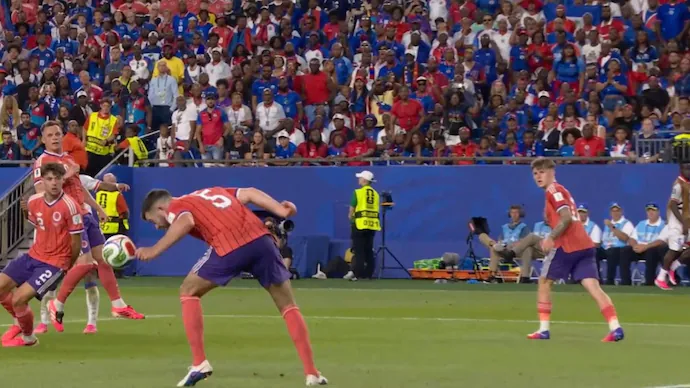
Haitian midfielder Jean-Ricner Bellegarde unleashed a powerful strike from outside the penalty area that appeared to make contact with the arm of Scotland defender Grant Hanley inside the box.
Haiti’s players immediately appealed for a penalty, convinced the ball had struck Hanley’s hand in an unnatural position. However, the referee allowed play to continue and VAR did not recommend an on-field review.
Television replays quickly spread across social media platforms, triggering widespread debate among football fans.
Many supporters argued that the incident met the criteria for a handball offense and questioned why video officials failed to intervene.
The controversy intensified because Hanley had also been involved in another handball appeal earlier in the match, adding further frustration among Haitian supporters.
Social Media Reacts Strongly
Following the incident, social media platforms were flooded with reactions from fans criticizing the officiating.
Several users described the decision as one of the most controversial moments of the tournament so far, while others accused officials of denying Haiti a legitimate opportunity to equalise from the penalty spot.
The lack of a detailed VAR explanation only added to the confusion, with many viewers demanding greater transparency regarding the review process.
The debate quickly became one of the most discussed football topics online as clips of the incident continued to circulate across various platforms.
Another VAR Decision Comes Under Scrutiny
Questions over the officiating did not end with the handball incident.
Deep into stoppage time, Scotland midfielder Kenny McLean challenged Haiti’s Josue Casimir in a high tackle that many observers considered dangerous.
The referee issued only a yellow card, despite replays appearing to show contact above knee height.
Once again, VAR chose not to recommend a review for a potential red card offense.
That decision further fueled criticism from fans and pundits, many of whom felt Haiti had been disadvantaged by multiple key calls during the match.
As the final whistle approached, frustration among Haitian supporters continued to grow, with many believing the officiating had influenced the outcome.
Haiti Earn Praise Despite Defeat
While the result ultimately favored Scotland, Haiti emerged from the match with considerable respect.
Playing in their first FIFA World Cup since 1974, the Caribbean nation showed courage, discipline and attacking intent throughout the contest.
Rather than sitting back against higher-ranked opposition, Haiti consistently looked to create chances and challenge Scotland’s defense.
After conceding the opening goal, they responded positively and produced several dangerous attacks.
Wilson Isidor came close to scoring from a dangerous delivery in the closing stages, while Frantzdy Pierrot narrowly missed the target with a late header that could have earned Haiti a historic point.
Although they left empty-handed, their performance suggested they could still play a significant role in Group C.
What the Result Means for Group C
The victory gives Scotland an important three points at the start of their World Cup campaign and boosts confidence ahead of a challenging fixture against Morocco on June 20.
Morocco, who drew 1-1 with Brazil in another major Group C clash, will provide a much tougher test for Steve Clarke’s side.
For Haiti, the challenge becomes even greater as they prepare to face five-time world champions Brazil in their next match.
Despite the defeat, Haiti’s competitive display and the controversy surrounding the officiating have ensured that their World Cup campaign remains one of the tournament’s most talked-about stories.
Refereeing Debate Overshadows Scotland’s Big Moment
Scotland achieved what they came for — a winning start and three valuable points. Yet instead of focusing solely on McGinn’s match-winning goal and the team’s historic victory, much of the post-match conversation has centered on the referee and VAR.
Whether the disputed decisions were correct or not will continue to be debated, but one thing is clear: the controversy has overshadowed Scotland’s long-awaited World Cup triumph and added another chapter to the growing discussions around VAR’s role at FIFA World Cup 2026.