
WORLD / The movement of three fully loaded supertankers through the Strait of Hormuz on Wednesday has raised cautious optimism that tensions surrounding one of the world’s most important oil routes may be easing.
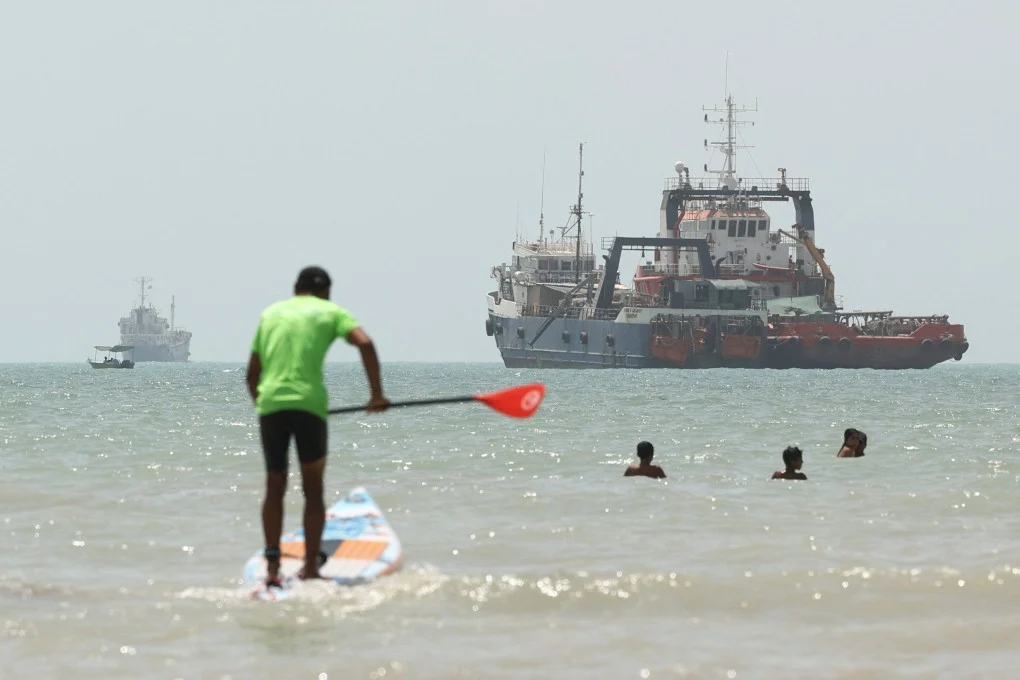
The crossings included two Chinese-linked Very Large Crude Carriers (VLCCs) and one South Korean tanker, all carrying massive quantities of crude oil out of the Persian Gulf. The development comes amid signs that Iran may be slowly relaxing restrictions on maritime traffic after weeks of severe disruption caused by regional conflict and heightened military tensions.
At the same time, Iran confirmed that it had allowed 26 vessels to transit the Strait of Hormuz in a single day — a sharp increase compared with recent weeks, when shipping activity through the narrow waterway had dramatically collapsed.
Hormuz Traffic Had Fallen Sharply
The Strait of Hormuz is one of the world’s most strategically sensitive maritime routes. Nearly one-fifth of global oil exports normally pass through the narrow channel connecting the Persian Gulf with the Arabian Sea.
However, since the latest regional conflict escalated, shipping activity in the strait has slowed dramatically. According to vessel tracking data, daily ship movements reportedly fell from over 100 vessels before the crisis to roughly 10 ships per day in recent weeks.
The sharp decline triggered global concern about energy supplies, oil prices, and the possibility of broader instability across international shipping lanes. Against this backdrop, the successful passage of three large crude carriers is being closely watched by governments, shipping firms, and energy markets worldwide.
Chinese Tankers Among Major Departures
Two of the three supertankers were Chinese-linked vessels. One of them, the Yuan Gui Yang, is operated by Cosco Shipping Energy Transportation, one of China’s largest maritime transport firms.
The second tanker, the Ocean Lily, sails under a Hong Kong flag and is linked to a company managed by a subsidiary of Sinochem Corporation. Shipping data indicates that the Yuan Gui Yang is expected to arrive at Shuidong port in Guangdong province on June 4, while the Ocean Lily is scheduled to reach Meizhouwan port in Fujian province on June 7.
The third tanker to leave the Persian Gulf was the South Korean-flagged Universal Winner, which is expected to dock in Ulsan on June 9. Together, the three VLCCs are estimated to be transporting nearly 6 million barrels of crude oil.
Iran Reportedly Allows Certain Ships to Leave Without Fees
According to shipping industry sources quoted in regional reports, Iran allowed the Chinese vessels to pass through the strait without imposing transit fees.
Earlier in the crisis, Tehran had announced that vessels using the Strait of Hormuz would face new transit charges as tensions escalated. However, Iranian officials also hinted that “friendly nations” could receive exemptions. Last month, Iran’s ambassador to Russia, Kazem Jalali, publicly stated that Tehran would exempt countries considered friendly from the newly introduced shipping fees.
Sources familiar with shipping operations suggested that some Chinese ships trapped in the Gulf for months were now being allowed to leave without payment.ye pade
South Korea’s foreign ministry also confirmed that the Universal Winner crossed the strait without paying any toll. However, analysts stressed that Iran is still handling permissions individually rather than reopening unrestricted commercial passage for all vessels.
IRGC Confirms Controlled Transit Operations
Iran’s Islamic Revolutionary Guard Corps (IRGC) officially confirmed on Wednesday that 26 ships, including oil tankers and container vessels, had crossed the Strait of Hormuz under its supervision.
In a statement published by the Islamic Republic News Agency, the IRGC said vessels were allowed transit only after obtaining official permission.
The statement underlined Tehran’s continuing determination to maintain operational control over the strategic waterway despite signs of easing restrictions.
Iran’s handling of Hormuz traffic has become a key geopolitical issue because the strait represents one of the most critical chokepoints in global energy trade.
Analysts Urge Caution
Despite the latest developments, shipping experts have warned against assuming the crisis is over.
Ralph Leszczynski, head of research at shipping services group Banchero Costa, said that occasional vessel crossings had continued even during the height of tensions.

“Some tankers have crossed in previous weeks, so the strait has never been completely closed,” he explained.
Leszczynski cautioned that the movement of only a few VLCCs does not necessarily indicate a long-term reopening of the waterway. Shipping markets are now watching carefully to see whether Iran continues approving more vessel movements over the coming days and weeks.
US-Led Pressure Still Impacting Iran
Analysts also pointed out that the broader US-led pressure campaign against Iran remains highly effective.
According to industry observers, while smaller ships transporting refined petroleum products or Iraqi liquefied petroleum gas have occasionally passed through the region, no tanker carrying Iranian crude oil has successfully broken through the maritime restrictions so far.
This reflects the continuing impact of sanctions, naval monitoring, and geopolitical pressure surrounding Iranian oil exports.
The United States and its allies remain deeply concerned about Iran’s regional military activities and its influence across the Middle East. At the same time, Washington is attempting to prevent any major disruption to international oil supplies.
China’s Growing Role
The latest crossings also highlight China’s increasingly important role in Gulf energy markets. China remains one of the world’s largest importers of crude oil and depends heavily on Middle Eastern energy supplies. Stable shipping routes through Hormuz are therefore crucial for Beijing’s economic security.
Chinese shipping firms and energy companies have continued maintaining relationships with Gulf states despite rising geopolitical tensions. The fact that Chinese-linked tankers reportedly received preferential treatment from Iran may also reflect the close diplomatic and economic ties between Beijing and Tehran.
Global Markets Watching Closely
For global energy markets, any sign of stability in the Strait of Hormuz is significant. Disruptions in the waterway can rapidly affect oil prices, shipping insurance costs, freight rates, and supply chains across Asia, Europe, and beyond.
Countries such as India, Japan, South Korea, and China rely heavily on Gulf oil shipments passing through the strait.
While the latest tanker movements may suggest a temporary easing of tensions, uncertainty remains high. Much will depend on whether Iran continues permitting larger numbers of vessels to move freely or returns to tighter restrictions if regional tensions rise again. For now, the successful crossings offer a rare sign of cautious relief in a region where maritime security remains deeply tied to global economic stability.