As pressure continues to mount on Chennai Super Kings following a string of underwhelming performances in the ongoing Indian Premier League 2026 season, head coach Stephen Fleming has addressed growing scrutiny around his role, legacy, and coaching methods.
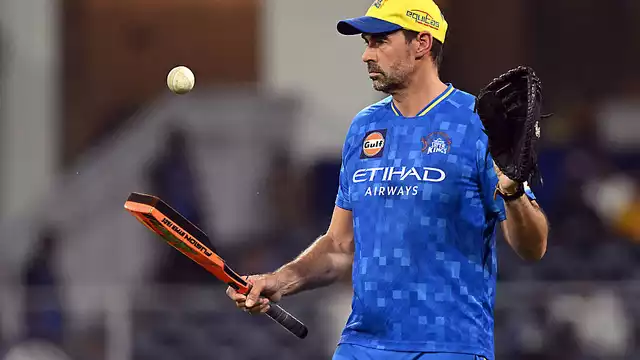
Speaking ahead of CSK’s crucial fourth match of the season, the former New Zealand captain remained calm and composed, dismissing suggestions that he has not received enough credit for the franchise’s success over the years. Instead, Fleming chose to deflect attention away from himself and place the spotlight firmly on the players and the leadership of MS Dhoni.
A Legacy Built on Consistency
Stephen Fleming’s association with Chennai Super Kings is one of the most enduring relationships in franchise cricket. Having been part of the squad during the inaugural IPL season in 2008, Fleming transitioned into the role of head coach in 2009—a position he has held ever since.
Over the years, under his guidance, CSK has emerged as one of the most successful teams in IPL history. The franchise has clinched five IPL titles and two Champions League T20 trophies, establishing a legacy defined by consistency, stability, and a strong team culture.
Despite this remarkable record, recent performances have brought the team—and by extension, Fleming—under scrutiny. Questions have been raised about whether CSK’s methods have become outdated in the rapidly evolving T20 landscape.
But Fleming, known for his calm demeanor, was quick to downplay such concerns.
It’s Always About the Players”
When asked whether he felt underappreciated for CSK’s past success, Fleming’s response was characteristically humble.
He emphasized that cricket, at its core, remains a players’ game, and that victories are ultimately determined by performances on the field rather than decisions made in the dugout. According to Fleming, the role of a coach, while important, is largely supportive—focused on preparation, fitness, and mental conditioning. However, once the match begins, it is the players who take charge and deliver results. ye pade
This perspective reflects Fleming’s long-standing philosophy of empowering players rather than seeking personal recognition. He reiterated that accolades and praise were never his primary motivation. Instead, his satisfaction comes from contributing to a system that allows players to thrive.
The Dhoni Factor
In his remarks, Fleming also acknowledged the influence of MS Dhoni, widely regarded as one of the greatest captains in cricket history. Working alongside Dhoni has been a defining aspect of Fleming’s coaching career. The synergy between the two has often been credited as a key factor behind CSK’s sustained success. Fleming described himself as fortunate to have collaborated with a leader of Dhoni’s caliber, highlighting how the captain’s understanding of the game and ability to manage pressure situations have played a crucial role in shaping the team’s identity.
Rather than positioning himself as the architect of CSK’s achievements, Fleming credited Dhoni and the players for creating a winning culture that has stood the test of time.
Facing Criticism Head-On
While Fleming dismissed concerns about recognition, he did not shy away from addressing criticism related to CSK’s recent struggles.
He acknowledged that scrutiny is a natural part of professional sport, especially when results do not go in a team’s favor. According to him, criticism is not only expected but also justified during challenging phases. “Criticism is fair when you don’t do well,” Fleming admitted, underlining his acceptance of the pressures that come with his role.
However, he was quick to point out that the perception of stagnation or outdated strategies does not align with reality.
Staying in Tune with Modern T20 Cricket
One of the key criticisms directed at CSK has been the belief that their approach to T20 cricket has not evolved with the changing dynamics of the game. Fleming strongly refuted this notion.
He revealed that his involvement in multiple T20 leagues around the world—including Major League Cricket (MLC) and SA20—has allowed him to stay closely connected with emerging trends, player development, and tactical innovations.
According to Fleming, his year-round engagement with the game ensures that he remains updated on global cricketing developments. From player auctions to team strategies, he is continuously analyzing and adapting to the evolving demands of the format.
In fact, Fleming suggested that his exposure to different leagues has enhanced his understanding of the game, enabling him to bring fresh perspectives back to CSK.
Another factor contributing to CSK’s recent struggles is the transition within the squad.
Fleming highlighted that the team has undergone significant changes, with several new players being integrated into the lineup. Unlike teams that have retained a stable core, CSK is currently in a phase of rebuilding and adjustment.
This transition, while necessary, comes with its own set of challenges. Developing cohesion, understanding roles, and building partnerships take time—something that cannot be rushed in a high-pressure tournament like the IPL.
Fleming admitted that the team is still in the process of finding the right balance and combinations. However, he expressed confidence that with time and continued effort, the players will adapt and deliver improved performances.
Signs of Promise Despite Results
Despite the lack of wins, Fleming pointed out that there have been positive signs in CSK’s performances. He cited their recent match, where the team managed to score over 200 runs, as an example of their potential. While the bowling may not have been as effective in the closing stages, the overall performance indicated that the team is not far from finding its rhythm.
According to Fleming, what the team needs now is confidence and a breakthrough result—a win that can reinforce belief and set the tone for the rest of the season.
The Role of Hard Work and Persistence
Fleming emphasized that the solution to CSK’s current challenges lies in hard work and persistence. Rather than overreacting to criticism or making drastic changes, he advocated for a measured approach focused on continuous improvement.
He acknowledged that both he and the team management are fully aware of the issues and are working diligently to address them. The focus, he said, is on identifying areas of weakness, refining strategies, and ensuring that players are prepared to perform under pressure.
Dewald Brevis: A Potential Boost
Amid the challenges, Fleming also spoke about the potential return of Dewald Brevis, whose availability for the upcoming match remains uncertain.
The young South African has been a notable absence for CSK, and Fleming was full of praise for his talent and development. Describing Brevis as an “incredibly talented” player, Fleming highlighted his growth and maturity despite his young age. He noted that Brevis has worked hard to refine his game and now plays with greater clarity and confidence.
Fleming also emphasized Brevis’s aggressive yet skillful approach, which aligns well with the demands of modern T20 cricket. His ability to adapt and perform consistently makes him a valuable asset for the team. If available, Brevis could provide a significant boost to CSK’s lineup, adding depth and firepower to their batting order.
Looking Ahead: A Crucial Phase for CSK
As the IPL 2026 season progresses, Chennai Super Kings find themselves at a critical juncture. With their fourth match approaching, the team is still searching for its first win—a situation that adds urgency to their campaign.
Fleming, however, remains optimistic. His calm and measured approach reflects a belief in the team’s ability to turn things around. Rather than dwelling on past results, the focus is on the future—on building momentum, gaining confidence, and rediscovering the winning formula that has defined CSK for over a decade.
Stephen Fleming’s response to criticism offers a glimpse into the mindset of a coach who prioritizes team success over personal recognition. His emphasis on players, his acknowledgment of challenges, and his commitment to continuous improvement highlight the qualities that have made him one of the most respected figures in franchise cricket.
While Chennai Super Kings may be going through a difficult phase, their history suggests that they are more than capable of bouncing back.
With a strong leadership core, experienced management, and a willingness to adapt, CSK’s journey in IPL 2026 is far from over. And as Fleming himself suggests, it may only take one victory to reignite the spark.