WORLD / Chinese President Xi Jinping is expected to visit North Korea as early as next week, according to a report by South Korea’s Yonhap News Agency, signalling a further warming of ties between Beijing and Pyongyang amid rising regional tensions and shifting global alliances.
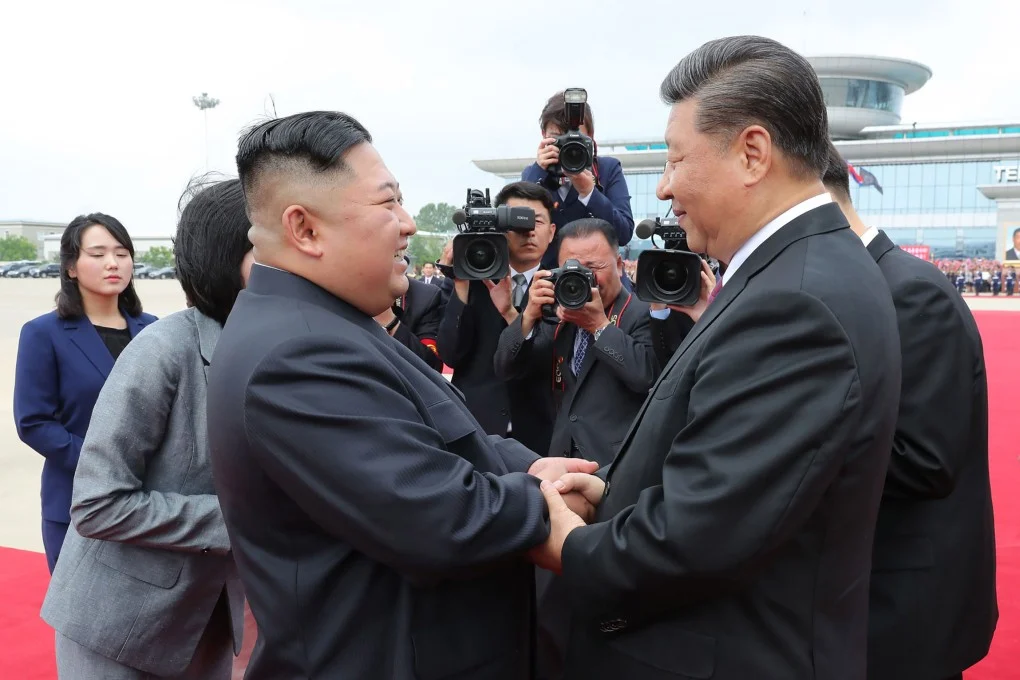
The report, citing South Korean government sources, said intelligence suggested Xi could travel to Pyongyang either later this month or in early June. If confirmed, the visit would mark Xi’s second trip to North Korea since becoming China’s leader, following his previous visit in 2019.
While China has not officially confirmed the trip, Chinese foreign ministry spokesman Guo Jiakun described China and North Korea as “good friends and close neighbours” that continue to maintain close exchanges.
The possible visit comes at an important geopolitical moment. China has been strengthening ties with North Korea while also balancing relations with the United States, Russia and South Korea. Analysts believe Xi’s trip could carry both symbolic and strategic significance as Beijing seeks to reinforce its influence on the Korean peninsula.
Some observers suggest Xi may attempt to position China as a mediator between North Korea and the United States. According to Yonhap, one South Korean official indicated the Chinese leader could seek to ease tensions and reopen diplomatic communication between Washington and Pyongyang.
The Korean peninsula remains one of Asia’s most sensitive security flashpoints because of North Korea’s nuclear weapons programme and growing military cooperation with Russia.
The expected visit follows Chinese Foreign Minister Wang Yi’s trip to Pyongyang last month, where he met North Korean leader Kim Jong-un and Foreign Minister Choe Son-hui. During that visit, Wang emphasised the need for China and North Korea to defend their security and development interests together amid what he described as a turbulent international environment.
Relations between Beijing and Pyongyang have grown noticeably warmer in recent months after years of reduced interaction during the Covid-19 pandemic. China has resumed direct flights and passenger train services to North Korea, helping restore economic and diplomatic connections that had been severely disrupted since 2020.
However, North Korea’s reopening remains limited. The country has largely welcomed only Russian visitors while keeping broader international tourism restricted. Before the pandemic, Chinese tourists made up the largest share of foreign visitors to North Korea.
The growing closeness between China, North Korea and Russia has raised concerns in Washington, Seoul and Tokyo. Last year, Kim Jong-un appeared alongside Xi Jinping and Russian President Vladimir Putin during a major military parade in Beijing, highlighting increasingly visible coordination among the three countries.
After Xi’s recent summit with Putin, China and Russia issued a joint statement opposing foreign pressure on North Korea, including sanctions, military pressure and policies aimed at isolating Pyongyang.
The statement reflected Beijing and Moscow’s shared criticism of Western-led pressure campaigns against North Korea and their support for a more security-focused diplomatic approach.
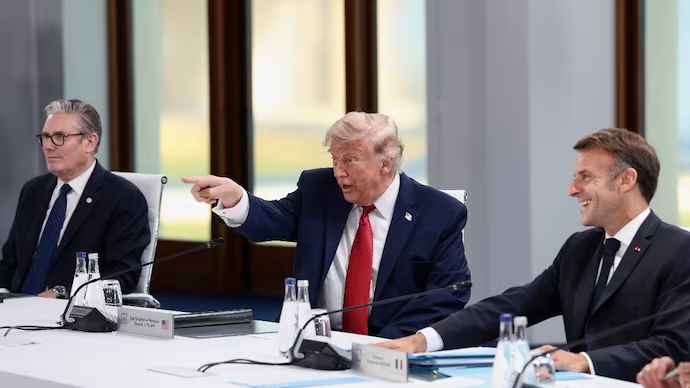
Meanwhile, US President Donald Trump has indicated he remains open to renewed talks with Kim Jong-un. Trump, who held three historic summits with Kim during his first term, recently said he had maintained communication with the North Korean leader.
Trump also discussed the Korean peninsula issue during his recent summit with Xi Jinping in Beijing, though few details from those talks were made public. A White House statement after the meeting said both leaders supported the goal of denuclearising North Korea.
Despite those diplomatic efforts, North Korea has continued expanding its weapons programmes and has repeatedly rejected outreach attempts from South Korea’s President Lee Jae Myung.
Relations between the two Koreas have sharply deteriorated in recent years. In late 2023, North Korea officially declared inter-Korean relations to be those of “two hostile states”, effectively abandoning decades-old reunification language.
South Korea has also adjusted its policy approach. In a recent unification white paper, Seoul for the first time formally described North and South Korea as separate states while stressing the importance of peaceful coexistence. ye pade
South Korea is now increasingly looking toward China to help reduce tensions with Pyongyang. Earlier this year, President Lee Jae Myung visited Beijing in an effort to rebuild diplomatic momentum between Seoul and Beijing after years of strained ties.
Although Xi and Lee agreed on the importance of regional stability, China has become more cautious about publicly emphasising the immediate denuclearisation of North Korea.
Since 2022, Beijing has gradually reduced its use of the phrase “denuclearisation of the Korean peninsula” in official statements and diplomatic documents. Analysts see this shift as a sign that China is prioritising regional stability and strategic competition with the United States over aggressive pressure on Pyongyang’s nuclear programme.
If Xi’s visit to North Korea goes ahead, it would underline China’s growing role in shaping security dynamics in Northeast Asia. The trip could also send a strong signal that Beijing intends to remain central to any future negotiations involving North Korea, the United States and regional powers.