
The Indian Premier League has always been a laboratory for cricket’s evolution, but few experiments have sparked as much polarized debate as the Impact Player rule. While legends of the game and seasoned captains have called for its removal—arguing it devalues the role of the all-rounder—a new generation of cricketers is looking at the rule through a completely different lens.
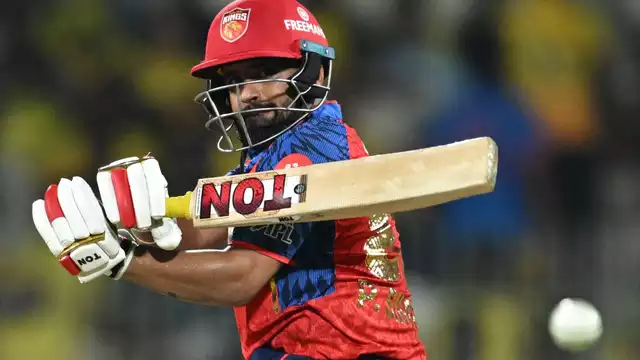
At the forefront of this youthful defiance is Prabhsimran Singh. The Punjab Kings opener isn’t just surviving in the era of the 12th man; he’s thriving because of it. In a season defined by soaring strike rates and 250+ totals, Prabhsimran’s recent backing of the rule offers a crucial insight into why the BCCI is hesitant to scrap a provision that has fundamentally altered the DNA of T20 cricket.
1. The “Waiting Room” Dilemma: Opportunity in a Crowded League
For a young domestic player, the IPL can be a cruel place. You are signed for your potential, but often spend years fetching drinks while international superstars occupy the XI. Prabhsimran knows this frustration better than most.
“Speaking as a youngster, I see it as an opportunity,” Prabhsimran noted. “When I came here, it has been eight years now, and I did not get many chances in the first four years. I used to sit outside and think about how I could get a chance to play.”
The Impact Player rule has effectively killed the “bench-warmer” syndrome. By allowing a team to name five substitutes and bring one in at any point, the “playing XI” has effectively become a “playing XII.” This allows specialized talents—like a power-hitting opener who might not be the best fielder, or a death-over specialist who can’t bat—to find a spot that didn’t exist three years ago. ye pade
For Prabhsimran, the rule isn’t a tactical gimmick; it’s the bridge that connected his years of domestic toil to the bright lights of the IPL stage.
2. Breaking the 200-Run Psychological Barrie
There was a time when 160 was competitive, 180 was match-winning, and 200 was a miracle. Today, 200 is often the par score. Prabhsimran argues that the Impact Player rule has provided the “safety net” required to play high-risk, high-reward cricket.
The Math of Aggression
When a team knows they have an extra batter sitting in the dugout ready to come in, the top order plays with a sense of “reckless clarity.”
- The Powerplay Shift: Previously, openers would “see off” the new ball. Now, the mandate is to maximize the first six overs at any cost.
- The 250 Target: “It is not that difficult to reach 250 plus,” Prabhsimran says confidently. This isn’t bravado; it’s a reflection of a tactical shift where teams no longer fear a middle-order collapse because the “Impact sub” can stabilize the innings if things go south.
3. The Shreyas Iyer Era at Punjab Kings
Every young player needs a “Security Blanket,” and for the Punjab Kings squad of 2026, that blanket is Shreyas Iyer. Since taking over the captaincy, Iyer has implemented a culture of radical psychological safety.
In the high-pressure environment of the IPL, a string of two or three low scores can usually signal the end of a young player’s season. However, Prabhsimran’s testimony paints a different picture of the PBKS dressing room:
“I feel he’s the best captain [I have played under] because if you haven’t scored for a few matches, he’ll come and talk to you, tell you there’s no stress.”
By labeling Prabhsimran a “senior player” despite his age, Iyer has shifted the player’s mindset from trying to survive to trying to lead. This empowerment is visible in how Prabhsimran now approaches the game—not just as a hitter, but as a tactician.
4. The Wicketkeeper’s “Tactical Tower”
Leadership isn’t always about the captain’s armband. Prabhsimran has embraced the strategic advantage of being a wicketkeeper—a position he calls the “best view of the match.”
In the modern game, where stadiums are deafeningly loud and boundaries are pushed to the limit, the captain is often stationed at long-on or long-off to save crucial runs. This creates a communication gap between the captain and the bowler.
Prabhsimran’s Role in the Leadership Group:
- Fielding Angles: Adjusting fine-leg or third-man by a few inches based on the batter’s movement.
- The Bowler’s Confidant: Providing immediate feedback on pace, turn, and bounce after every delivery.
- The Bridge: Acting as the on-field lieutenant when the crowd noise makes Shreyas Iyer’s instructions from the boundary impossible to hear.
5. The “Abhishek Sharma” Factor: Healthy Competition
The rise of Abhishek Sharma (now an India international) has set a benchmark for every young opener in the country. For Prabhsimran, seeing his Punjab teammate succeed isn’t a source of jealousy, but a roadmap.
The two share a “healthy competition” that exemplifies the current state of Indian cricket. The talent pool is so deep that “doing well” is no longer the standard. To get noticed by selectors, you have to be extraordinary.
“There’s so much competition, you have to do more,” Prabhsimran admits. “Every time I don’t get picked, I know what I am doing is not enough.”
6. The Road to the Blue Jersey
Prabhsimran Singh is realistic. He knows the Indian top-order is currently the most contested real estate in world sports. With names like Jaiswal, Gill, Gaikwad, and Abhishek Sharma all vying for spots, the margin for error is zero.
However, his stint with India A has given him a taste of the next level. He views his IPL journey and the Impact Player rule as the ultimate training ground. By playing in a system that demands 200+ scores and high-intensity tactical shifts, he is preparing for the rigors of international T20I cricket.
7. Conclusion: A New Blueprint for the IPL?
The Impact Player rule will continue to have its detractors. Purists will argue it makes the game too easy for batters and too hard for bowlers. But for players like Prabhsimran Singh, the rule is the physical manifestation of the “New India” approach to cricket: Aggressive, Inclusive, and Unapologetically Fast.
As Punjab Kings continue their 2026 campaign, the focus won’t just be on the points table. It will be on the evolution of players like Prabhsimran—young men who took a controversial rule and turned it into a career-defining opportunity.
The message is clear: The game has changed. You can either complain about the rules or, like Prabhsimran, you can use them to hit the next ball for six.
Key Takeaways from the PBKS Camp
| Feature | Prabhsimran’s View |
| Impact Player Rule | A vital tool for youth opportunity and high-risk scoring. |
| Captaincy | Shreyas Iyer provides “stress-free” backing. |
| Strategy | Wicketkeeping is the “tactical lens” of the team. |
| Goal | Using India A performances as a springboard for the senior team. |