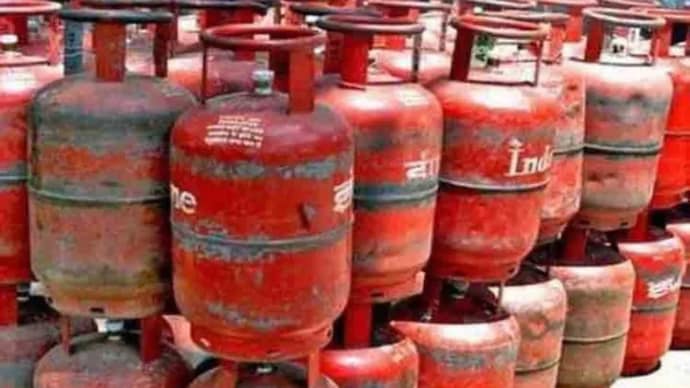
BharatNews / Domestic cooking gas in India has become costlier again, with the government increasing the price of a 14.2-kg LPG cylinder by ₹29. The latest revision raises the price in Delhi from ₹913 to ₹942, marking the second hike in just three months. The move has triggered a fresh political confrontation between the ruling government and the Opposition, even as authorities argue that global energy disruptions, particularly in West Asia, are behind the surge.
The price revision comes at a time when international LPG markets remain volatile due to ongoing geopolitical tensions. India, which imports more than 60% of its LPG requirements, has been directly affected by rising global benchmark prices. Officials say the Saudi Contract Price (CP), a key monthly benchmark set by Saudi Aramco, has increased sharply in recent months, pushing up import costs.
According to government data, the Saudi CP stood at around $522 per tonne in January. However, after disruptions linked to instability in West Asia and tensions affecting the Strait of Hormuz, the price surged to nearly $775 per tonne by April—an increase of almost 50%. This steep rise has significantly increased the landed cost of LPG imports into India, forcing domestic price adjustments.
The Petroleum Ministry has stated that the cost of supplying a domestic LPG cylinder has now risen to around ₹1,600 per unit. Despite the latest price hike, consumers are still paying significantly less than the actual cost, with the government and state-run oil marketing companies (OMCs) continuing to absorb the remaining burden.
At present, consumers in Delhi will pay ₹942 per cylinder after the latest revision. Beneficiaries under the Pradhan Mantri Ujjwala Yojana will pay an effective price of ₹642 after a direct benefit transfer subsidy of ₹300 per cylinder. The government has argued that even after the increase, Indian households are paying substantially lower prices compared to global averages.
However, the financial strain on state-owned oil companies is mounting. According to official estimates, OMCs such as Indian Oil Corporation, Bharat Petroleum Corporation, and Hindustan Petroleum Corporation are currently incurring losses of ₹600–₹700 per domestic LPG cylinder. Industry estimates had earlier placed these under-recoveries at around ₹703 per cylinder.
The Petroleum Ministry has warned that total losses from domestic LPG sales could rise to nearly ₹60,000 crore in the current financial year, compared to ₹41,338 crore in the previous year. To ease the pressure, the Union Cabinet has approved a compensation package of ₹30,000 crore for oil marketing companies.
Despite these financial challenges, the government has chosen a gradual price revision strategy rather than a sudden full-price pass-through to consumers. Officials say the aim is to balance fiscal burden with household affordability, particularly for lower-income families.
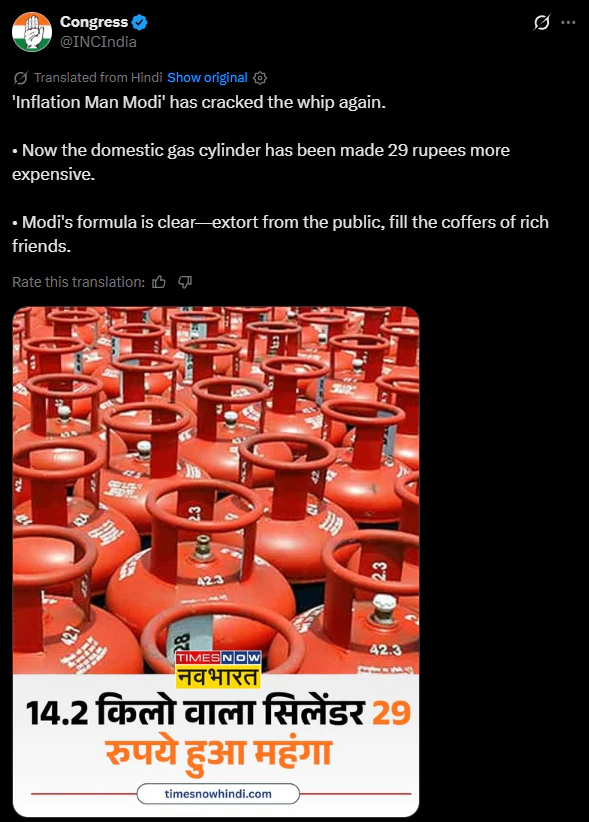
The political reaction to the hike was immediate and sharp. The Congress party accused the government of worsening inflation and burdening ordinary citizens. In a social media post, the party described the Prime Minister as “Inflation Man Modi,” alleging that the price hike reflects a broader pattern of economic mismanagement and favouritism towards large business groups. Opposition leaders also warned that LPG prices could soon cross the ₹1,000 mark per cylinder, increasing pressure on middle-class and poor households.
The government, however, defended the decision, arguing that India continues to have one of the lowest LPG prices in the world. Officials pointed out that even non-subsidised consumers in India pay around ₹700 less per cylinder than the actual market-linked cost of supply. They also compared global prices, stating that LPG cylinders cost significantly more in countries such as Pakistan, Nepal, Bangladesh, Sri Lanka, the United States, Australia, and Canada.
Beyond LPG, broader fuel inflation is also affecting consumers. Petrol and diesel prices have increased cumulatively by ₹7.50 per litre since mid-May, while CNG prices have gone up by around ₹6 per kilogram. Industry analysts estimate that oil marketing companies are still facing losses of approximately ₹11 per litre on petrol and ₹33.6 per litre on diesel, despite recent price adjustments.
Officials attribute the ongoing energy stress to global instability, especially in West Asia. The Strait of Hormuz, a critical maritime route through which nearly 54% of India’s LPG imports pass, has been particularly affected by regional tensions. Disruptions in this corridor have led to supply uncertainty and higher shipping and insurance costs.
The government has highlighted its efforts to ensure energy security during this period. It stated that Indian-flagged vessels continued transporting crude oil and LPG without interruption, preventing domestic shortages. Authorities also said they diversified supply sources, increasing imports from countries such as the United States, Canada, and Algeria to reduce dependence on traditional Gulf suppliers.
At the same time, domestic LPG production has reportedly increased by more than 60%, rising from about 32 thousand metric tonnes to 52 thousand metric tonnes during the crisis period. Officials said this helped cushion the impact of import disruptions and maintain stable supply across the country.
Anti-diversion measures have also been strengthened to ensure that subsidised LPG meant for households is not diverted into commercial use. The government maintains that despite global shocks, India has managed its fuel supply chain effectively and avoided severe shortages.
Still, for ordinary consumers, the immediate impact is felt in household budgets. With the latest revision, LPG prices in Delhi have increased by ₹89 over the past three months. From ₹853 before the March hike to ₹942 now, domestic cooking gas is steadily approaching the ₹1,000 mark, a psychologically significant level that could further intensify public debate on inflation.
As global energy markets remain unstable and geopolitical tensions persist, further price revisions cannot be ruled out. The challenge for policymakers will be balancing fiscal sustainability of oil companies with protecting consumers from continued inflationary pressure.