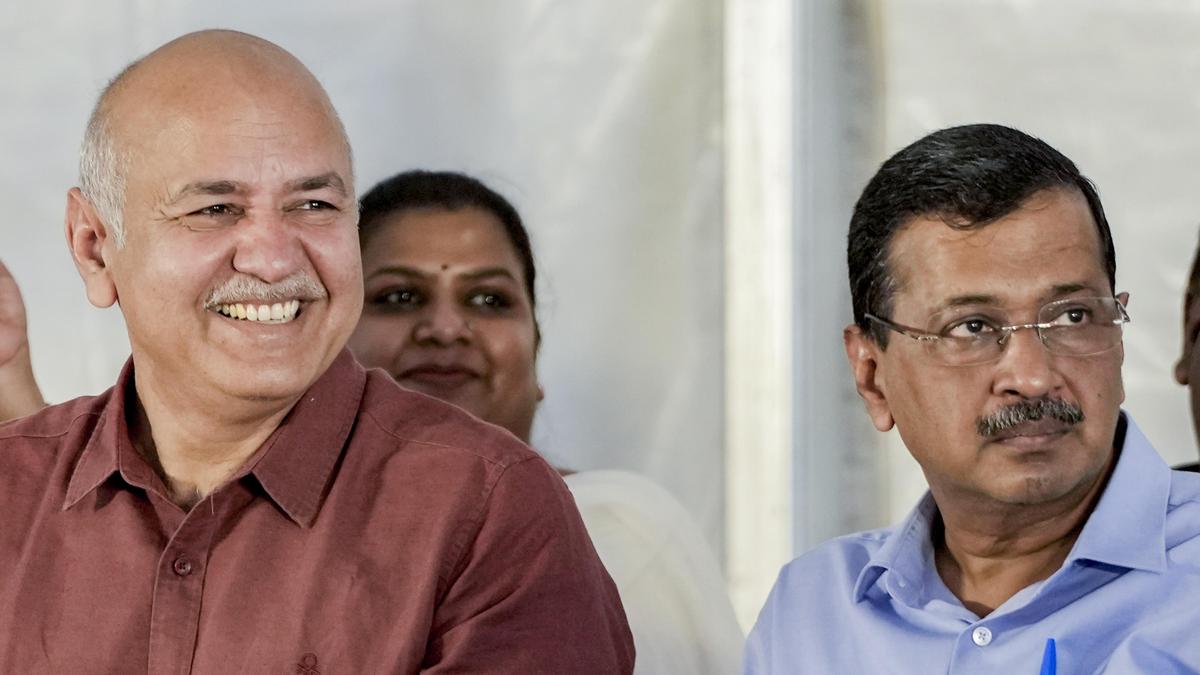
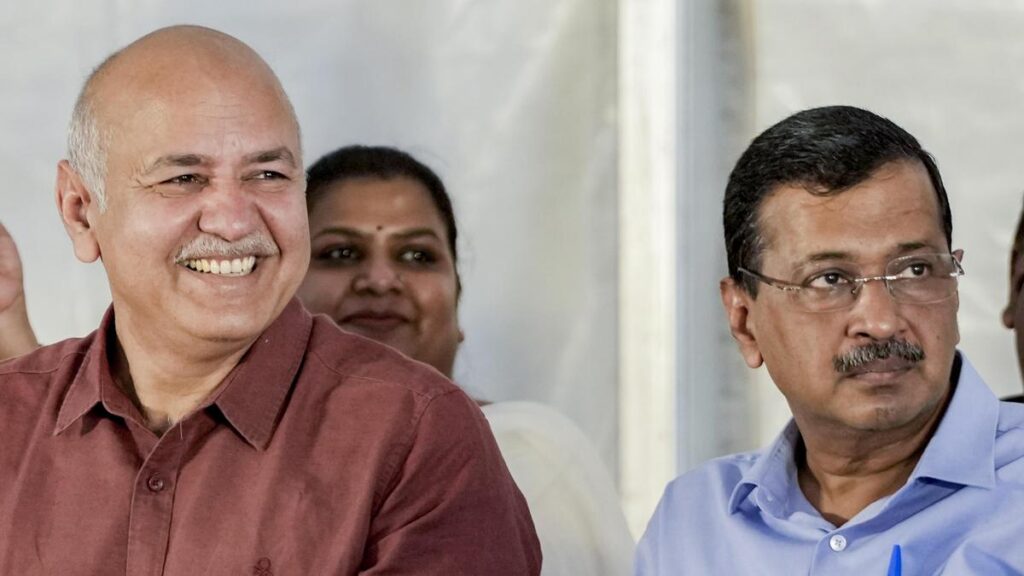
BHARATNEWS / The Delhi High Court on Tuesday issued notices to senior Aam Aadmi Party leaders Arvind Kejriwal, Manish Sisodia and several others in a suo motu criminal contempt case linked to an alleged social media campaign targeting Justice Swarana Kanta Sharma.
The case has emerged as a major development in the ongoing political and legal battle surrounding the Delhi excise policy case, which has dominated national politics for months. The contempt proceedings have also intensified the confrontation between the AAP leadership and the judiciary, raising questions about judicial independence, political criticism, and the limits of public commentary on court proceedings.
A division bench comprising Justices Navin Chawla and Ravinder Dudeja directed the accused leaders to submit their responses within four weeks. The court listed the matter for the next hearing on August 4.
Contempt Proceedings Triggered by Social Media Posts
The suo motu contempt proceedings were initiated by Justice Sharma on May 14 after she alleged that certain AAP leaders had carried out a “calculated campaign” to vilify her on social media.
According to the court, multiple posts and online statements attempted to portray the judge as politically biased while hearings related to the excise policy case were underway. Justice Sharma took serious objection to content that allegedly attributed “political allegiance” and “affiliation” to her.
The judge also referred to an allegedly edited video clip from a speech she had delivered at an educational institution in Varanasi. The clip was widely circulated on social media platforms, leading to further controversy.
Justice Sharma observed that instead of seeking legal remedies through the judicial process, the leaders appeared to be trying to influence public opinion through social media narratives. In her remarks, she stated that “remaining silent” in such circumstances would not amount to judicial restraint but rather a “surrender before a powerful litigant”.
Court Raises Concerns Over “Parallel Narrative”
One of the major concerns raised by the judge was the circulation of selected courtroom clips and commentary related to the excise policy proceedings.
The court noted that social media campaigns surrounding the case were allegedly creating a “parallel narrative” outside the judicial system. Justice Sharma indicated that such actions could undermine public confidence in the judiciary and interfere with the administration of justice.
Legal experts say contempt proceedings are generally invoked in cases where courts believe their authority or functioning is being obstructed or undermined. In this case, the court appears to view the online campaign as an attempt to pressure or discredit the judicial process. ye pade
The proceedings are considered significant because they involve senior political leaders and touch upon the sensitive balance between freedom of expression and respect for judicial institutions.
Background of the Excise Policy Case
The controversy is directly linked to the Delhi excise policy case, one of the most politically charged investigations involving the AAP government.
The case revolves around alleged irregularities in the formulation and implementation of Delhi’s liquor policy. Central agencies, including the Central Bureau of Investigation and the Enforcement Directorate, had accused several AAP leaders of corruption and policy manipulation.
However, on February 27, a trial court discharged Kejriwal, Sisodia, and 21 others in the case. The court ruled that the prosecution had failed to establish a legally sustainable case and observed that the matter could not survive judicial scrutiny in its current form.
The ruling was seen as a major relief for the AAP leadership and was celebrated by party workers across Delhi.
Soon after the discharge order, the CBI challenged the verdict before the Delhi High Court, leading to further legal proceedings.
Recusal Controversy Escalated Tensions
The dispute intensified after AAP leaders sought Justice Sharma’s recusal from hearing the CBI’s plea challenging the discharge order.
The leaders argued that certain circumstances had created apprehensions regarding impartiality. However, Justice Sharma dismissed the recusal applications on April 20 and continued to hear the matter.
Following this decision, Kejriwal, Sisodia, and another AAP leader reportedly sent a letter to Justice Sharma stating that they would no longer appear before her either personally or through legal counsel. In the letter, they said they would follow “Mahatma Gandhi’s path of Satyagraha”.
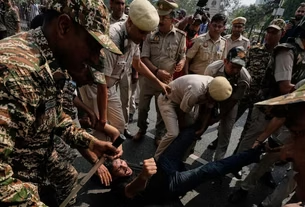
The letter quickly became a subject of political debate, with critics accusing the AAP leadership of challenging the authority of the judiciary. Supporters of the party, however, defended the move as a symbolic protest.
Political Reactions Intensify
The latest court action has further escalated tensions between the AAP and the Bharatiya Janata Party.
BJP leaders accused the AAP leadership of attempting to intimidate judges and weaken public trust in the judiciary. They argued that political leaders must respect court processes regardless of disagreements.
AAP leaders, meanwhile, have maintained that they are raising legitimate concerns regarding fairness and transparency in the legal proceedings.
The controversy has once again brought national attention to the increasingly bitter political rivalry in Delhi, where legal battles have become deeply intertwined with political narratives.
Significance of the Case
The contempt proceedings are likely to have major legal and political implications. Courts in India traditionally exercise contempt powers cautiously, particularly in matters involving criticism of judges or judicial decisions.
However, when courts believe attempts are being made to interfere with justice delivery or damage judicial credibility, they may intervene strongly.
For the AAP leadership, the case adds another layer of legal and political pressure at a time when the party is already dealing with multiple investigations and courtroom battles.
The next hearing on August 4 is expected to draw significant public and political attention, as the court examines the responses filed by Kejriwal, Sisodia, and the other proposed contemnors.
Until then, the case is likely to remain at the centre of India’s political and legal discourse.