A senior Iranian official has said that any potential peace agreement between Iran and the United States hinges on Washington releasing $24 billion in frozen Iranian assets, describing the move as a critical “test of trust” for US President Donald Trump and his administration.
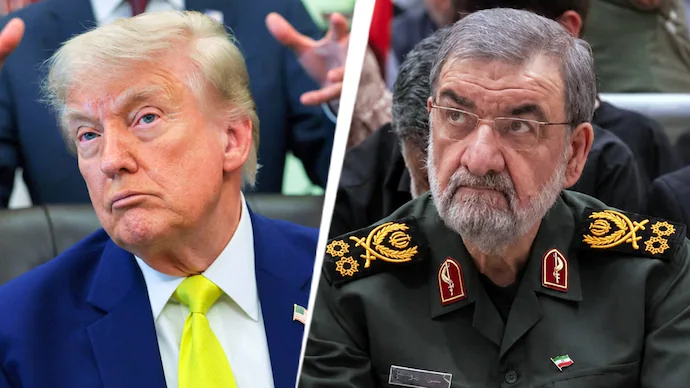
World news / The remarks were made by Mohsen Rezaei, a military adviser to Iran’s Supreme Leader, during an interview with CNN. Rezaei stated that negotiations between Tehran and Washington have reached a deadlock and that it is now up to the United States to take the next step.
According to Rezaei, Iran wants $12 billion of its frozen assets to be released immediately after signing an interim agreement with the United States, while the remaining $12 billion would be unlocked at a later stage. He stressed that the money belongs to Iran and should not be viewed as a concession from Washington.
“This is our own money, not America’s money,” Rezaei said, adding that the release of the funds would demonstrate whether the Trump administration is genuinely interested in reaching a lasting agreement.
The demand comes as indirect negotiations between Tehran and Washington continue amid heightened tensions across the Middle East. Despite several rounds of discussions, both sides remain far apart on key issues, including sanctions relief, regional security arrangements, and Iran’s future economic access.
US officials have reportedly expressed concerns about unfreezing large amounts of Iranian funds at this stage. According to reports, Washington fears that releasing the assets before a comprehensive agreement is reached could reduce American leverage during negotiations.
The issue is particularly sensitive for Trump, who has frequently criticized the 2015 Iran nuclear agreement negotiated under former President Barack Obama. Trump has repeatedly argued that the deal provided Iran with significant financial benefits while failing to adequately address broader security concerns.
While there is no universally agreed figure regarding the total amount of Iranian assets frozen worldwide, various estimates suggest the amount could exceed $100 billion. These funds are spread across multiple countries and financial institutions and remain subject to international sanctions and legal restrictions.
Rezaei also issued a warning regarding the possibility of renewed military confrontation. He said that if the United States resumes military operations against Iran, Tehran would significantly expand the scope of the conflict.
According to him, Iran’s response would not be limited to the Persian Gulf. He suggested that future military operations could extend across key maritime routes, including the Strait of Hormuz, the Bab-el-Mandeb Strait, the Red Sea, the Indian Ocean, and even parts of the Mediterranean Sea.
“We will give another dimension to the war,” Rezaei warned, indicating that American military installations across a wider region could become potential targets if hostilities resume.
Despite the strong rhetoric, Rezaei acknowledged that the likelihood of a full-scale war remains relatively low. He suggested that both sides continue to prefer a negotiated settlement, even though progress has been slow.
The Iranian adviser also dismissed speculation about a possible face-to-face meeting between Trump and Supreme Leader Ayatollah Mojtaba Khamenei. According to Rezaei, negotiations are still at an early stage, making such a high-level meeting unlikely in the near future.
His comments contrast with Trump’s recent remarks, in which the US president suggested relations between the two sides were improving and stated that he would be willing to meet the Iranian leader if conditions allowed.
Another key issue highlighted by Rezaei was Iran’s position on the Strait of Hormuz, one of the world’s most strategically important waterways. Before the current conflict, nearly one-fifth of global oil and liquefied natural gas shipments passed through the narrow channel connecting the Persian Gulf to international markets.
Rezaei reiterated Tehran’s long-standing position that Iran shares responsibility for managing the strait alongside Oman. While he denied reports that Iran intends to impose transit tolls on commercial vessels, he argued that ships using the route should contribute to maintenance and security costs.
The comments underscore the growing importance of economic issues in ongoing negotiations. While military tensions continue to dominate headlines, Iran appears increasingly focused on securing financial relief and regaining access to frozen assets as a prerequisite for any broader agreement.
As talks remain stalled, the demand for $24 billion has emerged as one of the most significant obstacles—and potentially one of the most important confidence-building measures—in efforts to prevent further escalation between Washington and Tehran.
With regional tensions already high and diplomatic progress limited, the coming weeks may determine whether the frozen-assets dispute becomes a breakthrough opportunity or another roadblock on the path to peace.