KHEL JAGAT / Zohran Mamdani once again found himself at the centre of a social media storm after attending Eid al-Adha celebrations in New York’s Bronx borough wearing traditional South Asian attire. Photos and videos from the event quickly spread across X, Instagram and TikTok, triggering both praise and criticism and reigniting debates around identity, religion and representation in American politics.
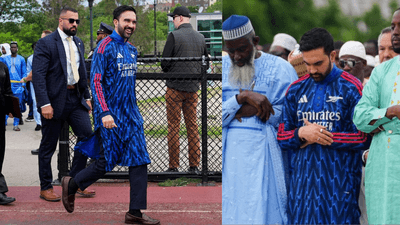
The New York politician, known for his progressive politics and outspoken activism, joined local Muslim residents for Eid prayers and community celebrations during one of the most important festivals in Islam. Wearing a light-coloured kurta and greeting members of the community, Mamdani appeared relaxed and cheerful as he interacted with families, religious leaders and supporters.
While the gathering itself was largely a local community event, the internet transformed it into a national political discussion within hours.
A Viral Political Moment
Social media users rapidly circulated images of Mamdani celebrating Eid, with reactions ranging from admiration to outrage. Supporters praised him for openly embracing his cultural and religious identity while participating in community traditions. Many users described the moment as an example of diversity and representation becoming increasingly visible in American political life.
However, critics online accused Mamdani of engaging in identity politics and using religious events for political branding. Some conservative commentators mocked his appearance, while others questioned the growing influence of progressive politicians linked to socialist or activist movements.
The reactions reflected the highly polarised nature of modern American politics, where even participation in a religious festival can become politically charged.
For supporters, Mamdani represented a younger generation of multicultural American leaders comfortable expressing both political beliefs and cultural identity in public. For critics, the event symbolised broader anxieties about changing demographics, progressive activism and religion in politics.
Who Is Zohran Mamdani?
Zohran Mamdani has emerged as one of the most recognisable progressive politicians in New York City in recent years. A member of the Democratic Socialists of America, he has built his political identity around issues such as affordable housing, labour rights, immigrant protections and public transportation reforms.
Born in Uganda to Indian parents, Mamdani comes from a well-known intellectual and artistic family. He is the son of internationally acclaimed filmmaker Mira Nair and renowned academic Mahmood Mamdani.
His multicultural background has often shaped both his political messaging and public image. Mamdani has openly discussed his experiences as a Muslim, South Asian and immigrant-background politician in America. Over the years, he has become especially popular among younger voters, progressive activists and immigrant communities in New York City.
Unlike many traditional politicians, Mamdani maintains a highly visible and internet-savvy public presence. He frequently appears in social media videos, attends grassroots events and engages directly with online audiences, making him particularly influential among digitally active younger demographics.
Why the Eid Appearance Drew Attention
The strong online reaction to Mamdani’s Eid appearance was not only about religion. It also reflected larger cultural and political tensions in the United States.
In recent years, questions around identity, race, religion and representation have become deeply connected to political debates. Politicians increasingly use cultural visibility to connect with communities, while opponents often frame such actions as divisive or performative. For Muslim Americans especially, visible representation in politics carries symbolic importance. Following decades of discrimination, surveillance and Islamophobic rhetoric after the September 11 attacks, many Muslim communities view public political participation as a sign of growing acceptance and inclusion.
Mamdani’s participation in Eid celebrations therefore resonated strongly with supporters who saw the moment as normalising Muslim representation in mainstream public life. At the same time, critics viewed the event through a political lens, arguing that progressive politicians increasingly rely on identity-based symbolism rather than broader policy discussions.
The debate quickly expanded beyond Mamdani himself and became part of wider arguments about multiculturalism, immigration and the future direction of American politics.
The Role of Social Media
The incident also highlighted how social media now shapes political narratives almost instantly.
What may once have remained a local community appearance became a nationwide topic because of viral posts, reaction videos and algorithm-driven engagement. Platforms like X and TikTok often amplify emotionally charged or controversial content, making political moments spread rapidly far beyond their original context.
In Mamdani’s case, supporters and critics alike contributed to the viral momentum by reposting images, adding political commentary and debating his public image.
Modern politicians increasingly operate in this environment where every appearance, outfit or public interaction can become part of a broader cultural conversation.
A Changing Political Landscape
Mamdani’s rise reflects broader demographic and generational changes taking place in American politics. Cities like New York are becoming increasingly shaped by younger, multicultural and immigrant-background communities whose political priorities often differ from older generations.
Politicians from South Asian, Muslim, African and Latino backgrounds are gaining visibility and influence across local and national politics. Their presence is reshaping discussions around identity, religion and representation in public office.
For supporters, Mamdani represents a more inclusive vision of American politics that reflects the country’s growing diversity. For opponents, he represents a progressive political movement they see as overly focused on identity and activism. Regardless of political opinion, the reaction to his Eid appearance showed how deeply culture and politics have become intertwined in the social media era.
A simple community celebration quickly evolved into a nationwide debate touching on religion, immigration, identity and the future of political representation in the United States. As online platforms continue blurring the lines between politics, culture and entertainment, moments like these are likely to become even more common — where a festival appearance can spark conversations reaching far beyond the original event itself.