World / The conflict between the United States and Iran entered a dangerous new phase on Saturday as Kuwait and Bahrain reportedly came under attack following fresh American military strikes on Iranian targets near the Strait of Hormuz. The latest exchange of attacks has intensified fears of a wider regional war, with concerns growing over global energy supplies, maritime security, and stability across the Middle East.
According to reports, the US military launched strikes against Iranian coastal radar and surveillance installations after American forces intercepted several drones allegedly launched by Iran toward the strategically important Strait of Hormuz. US officials claimed the drones posed a threat to international shipping routes and maritime traffic operating in the region.
The US Central Command stated that surveillance facilities located in Goruk and Qeshm Island, both positioned near the Strait of Hormuz, were targeted during the operation. American officials described the action as a defensive measure aimed at protecting commercial vessels and maintaining freedom of navigation in one of the world’s most critical shipping corridors.
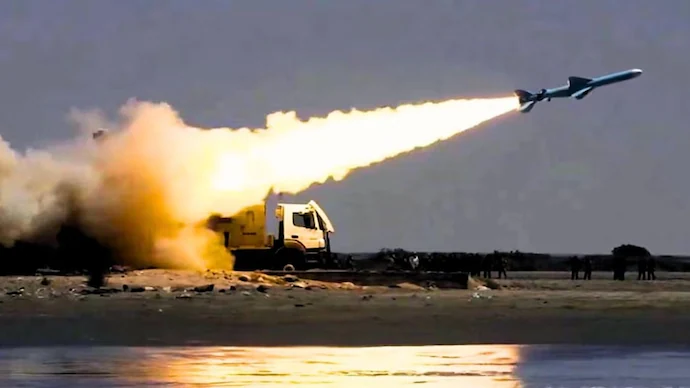
Iran responded swiftly to the strikes. The Iranian Revolutionary Guard Corps (IRGC) announced that it had launched attacks against American military bases located in Kuwait and Bahrain. Iranian authorities also claimed that their forces targeted several tankers attempting to pass through the Strait of Hormuz without authorization.
Authorities in Kuwait and Bahrain immediately activated emergency protocols. Kuwait’s air defense systems reportedly intercepted incoming missiles and drones, while Bahrain issued public warnings and instructed residents in certain areas to seek shelter. Sirens were heard in parts of the country as security forces remained on high alert.
Both Gulf nations strongly condemned the attacks. Kuwait’s Foreign Ministry described the Iranian strikes as a “blatant act of aggression” and warned that such actions threatened regional security and endangered civilian lives. Bahraini officials echoed similar concerns, accusing Tehran of escalating tensions and undermining ongoing diplomatic efforts.
Iran later claimed that ballistic missiles had successfully targeted American military facilities in both countries. However, US military officials disputed the extent of the damage, stating that most incoming missiles were intercepted before reaching their intended targets.
The latest confrontation comes amid continuing indirect negotiations between Washington and Tehran. For months, both sides have been engaged in diplomatic discussions aimed at reducing hostilities and reaching an interim agreement that could halt the conflict. Despite repeated rounds of talks, major disagreements remain unresolved.
One of the key issues involves Iran’s demand for access to billions of dollars in frozen oil revenues and relief from international sanctions affecting its energy exports. Tehran is also seeking an end to restrictions on its ports and greater influence over shipping activity in the Strait of Hormuz.
The strategic waterway remains at the center of the crisis. Before the conflict erupted, nearly one-fifth of the world’s oil supply passed through the Strait of Hormuz. Any disruption to shipping in the area has immediate consequences for global energy markets.
Since the outbreak of hostilities, shipping activity has been severely affected. Insurance costs for commercial vessels have increased dramatically, while several shipping companies have altered routes or temporarily suspended operations in the region. These disruptions have contributed to rising oil prices and growing concerns about inflation worldwide.
Reports also indicated that Pakistan continues to play a mediating role in efforts to reduce tensions. Iranian media suggested that senior Pakistani officials were traveling to Tehran to support diplomatic initiatives aimed at ending the conflict. However, official confirmation of these reports remained limited.
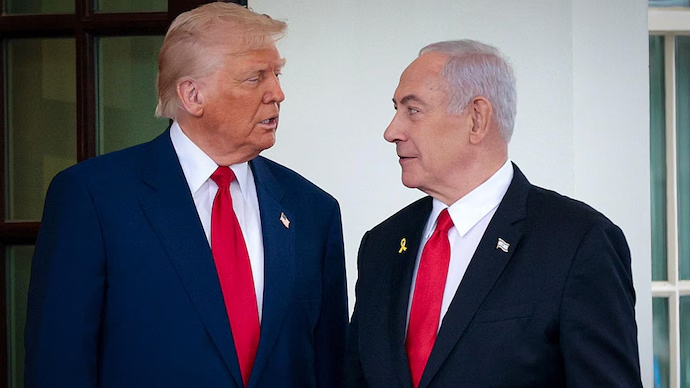
Meanwhile, political pressure is mounting on US President Donald Trump. Rising fuel prices and concerns about the economic consequences of the conflict have generated criticism both domestically and internationally. Addressing the situation in a recent interview, Trump claimed that American military operations had significantly weakened Iran’s missile and drone capabilities.
According to the US President, a large portion of Iran’s military infrastructure has been damaged, although he acknowledged that Tehran still retains a substantial arsenal capable of launching further attacks.
Despite military setbacks, Iranian leaders have continued to resist pressure from Washington. American officials believe that Iran’s leadership remains determined to secure concessions before agreeing to any settlement. Tehran has repeatedly emphasized that sanctions relief and economic guarantees are essential components of any future agreement.
The conflict began after military operations involving the United States and Israel targeted Iranian assets earlier this year. In response, Iran launched attacks against several regional targets and significantly restricted shipping activity through the Strait of Hormuz. Since then, both sides have exchanged strikes, raising fears that the confrontation could expand into a broader regional war.
The humanitarian and economic consequences are becoming increasingly visible. International organizations have warned that rising transportation and fuel costs are placing additional strain on vulnerable populations. The United Nations World Food Programme recently cautioned that supply chain disruptions and soaring energy prices could push millions of people closer to food insecurity.
Adding to regional instability, fighting has intensified in Lebanon. Iran-backed Hezbollah has reportedly carried out attacks against Israeli forces in southern Lebanon, while Israeli airstrikes have continued across several areas. The growing violence has complicated diplomatic efforts and created another obstacle to peace negotiations.
Iran has linked any future agreement with Washington to developments in Lebanon, insisting that Israeli military operations must end before broader diplomatic progress can be achieved. However, Israeli officials have maintained that military operations will continue until their security objectives are met.
As tensions continue to rise, international observers fear that any further miscalculation could trigger a much larger conflict involving multiple countries across the Middle East. With diplomacy struggling to produce results and military exchanges becoming more frequent, the situation remains highly volatile.
The latest attacks on Kuwait and Bahrain demonstrate how quickly the conflict is spreading beyond its original battlegrounds. Unless meaningful diplomatic progress is achieved in the coming weeks, the risk of a wider regional confrontation is likely to increase, carrying serious consequences for global security, energy markets, and international trade.